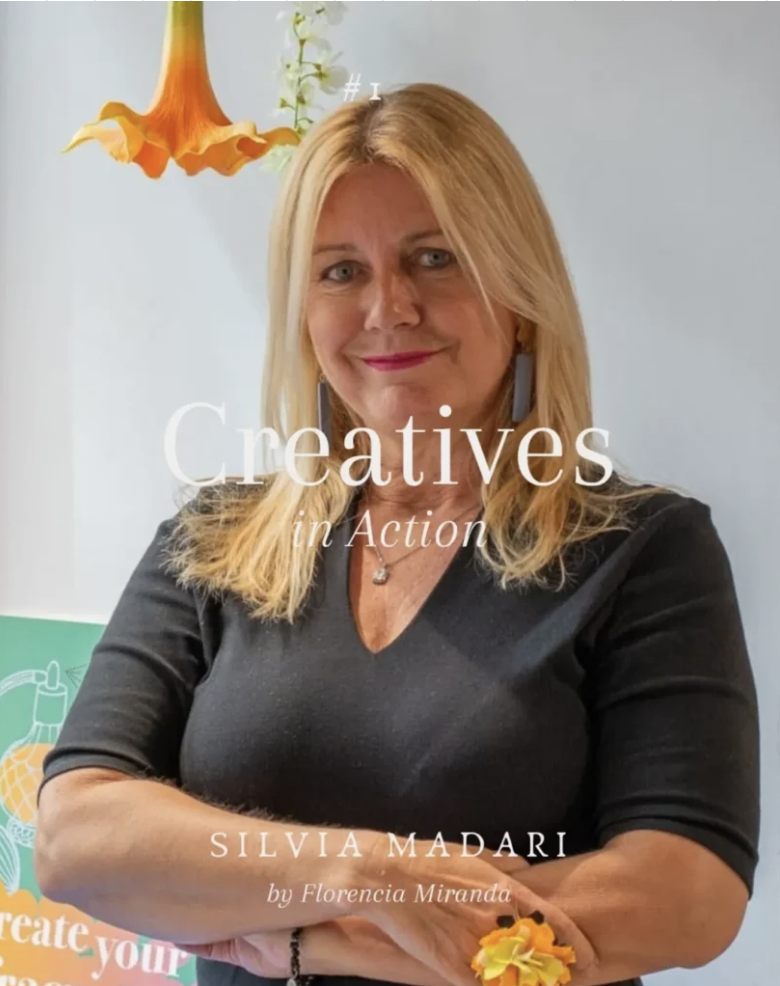
Creatives in Action is a series of studio interviews. Today I interviewed Silvia Madari.
It is a hot May day in Florence. I’ve already put the cameras in my backpack, the batteries are charged, and I check one last time that the memory cards are in place. I put the backpack on my shoulder and say goodbye to L. I leave the house and the sun hits my face. Even though I’ve been living here for two years, I still check the map before starting to walk—I usually get confused at the last moment when I have to do something important.
When I arrive at Quartiere Shop, a mixed store of designers and creatives located in the city center, Silvia opens the door for me with a radiant smile, and I visually take in the space. It’s my first time there, and I want to be prepared for the conversation ahead.
What is your name and what do you do?
My name is Silvia Madari and I am a perfumer. You could also say I am a “nose,” but it sounds quite strange.
What does your work consist of?
My specialty is not producing commercial perfumes, but personalized perfumes. The most important thing is that I focus heavily on people’s emotions and what they want to wear. This is very important for what we are creating. Because it can be for everyday use, for your wedding, for summer—whatever. And these perfumes have a completely different depth, and that is what I focus on: what is that person’s need?
Do you consider yourself a creative person?
I think so, and I also think there is a lot of psychology in this. Because I have to understand people immediately, I have to analyze them through fragrance. It’s very fun because when they choose certain fragrances, I already know… I don’t want to say “how they are,” but I can already see beyond what they show me. I don’t know if you understand—it’s like with you and photography…
There is also a need to study human behavior…
I think so, but I first studied psychology and pedagogy, and I also have three children. So I think I have quite a lot of experience. But psychology is absolutely necessary for this job.
How or when did you decide to dedicate yourself to this?
I have always worked with perfumes, for 20 years, but the perfume creation workshop entered my life about six or seven years ago. I started doing it first in Hungary, in Budapest, and then I moved to Italy. I began my work here in Florence, and that’s it.
So it’s something you carry with you…
Yes, fragrances have always been with me. So it was just the next step. It was also a matter of self-confidence, because if I had not believed I was capable of creating “your” perfect fragrance, I wouldn’t have been able to do it. So after gaining certain knowledge about fragrances, about technique, about how to create a perfume, and some knowledge of psychology—but most importantly, knowledge of ingredients.
As I was saying, I wanted to talk about the creative process. What is the process of creating a fragrance like?
Let’s divide it into two things. If I make a commercial perfume (for example, in the last few months I made one for a Hungarian singer’s brand and another for a company), it is completely different from what I do here (in the workshops), do you want me to explain it?
At the beginning I always teach a bit of perfume psychology to help people understand, because normally they come to me with the idea of “creating a perfume,” and for some reason, for people perfume means fragrance.
Yes, isn’t it?
No, it isn’t. It is something so big, so important. Perfume is only a small part of fragrance, so I try to bring them a bit more into this “perfume world” and explain that these are very important things—for example, that 70% of your daily mood is influenced by fragrances, and how you can play with them and regain your well-being.
I’m not sure if these concepts are clear, so at the beginning of the workshops I explain this process… the perfume pyramid, I explain feelings related to our memory, our brain, how we decide which notes we like and which we don’t, and how we can reprogram our brain from “I hated it” to “I accept it.”
I was thinking that when you create a perfume, for yourself or for someone you love, the process might be different. Where do the ideas for creating these fragrances come from?
Let’s take an example. I’m going to create a fragrance for you. I talk to you as you are talking to me now, okay? And I translate what you tell me into a fragrance. That means, for example, I will ask you some basic questions. Then I will immediately take these perfumes I have in front of me, and you will tell me that you are in contact with people, but you don’t need to speak, and that means for me that the aura of your perfume can be much broader… And then, while you tell me that sometimes you go out with your friends or your boyfriend, and that every weekend you go to parties or things like that, I also start choosing those perfumes. This is one way I can create that perfume.
The other way is that, even if you don’t tell me the story, if you are not a storyteller, but you tell me “I need my perfume because I want to show this part of myself,” “I want to show people that I am strong,” based on this I will also create a harmony between those fragrances.
Because for me, what you are wearing is not the important thing… there is only one thing that matters: that it is in harmony with you. If it is not, there is a problem. So when I create a perfume for you, I really need to know your personality and your story.
After the conversation we take some photos. Although I really enjoy this moment, it also makes me nervous. Capturing people’s essence is no small thing. At the end Silvia gives me another smile and a hug, we take a photo together, and we thank each other for the meeting. I leave the shop feeling very happy.
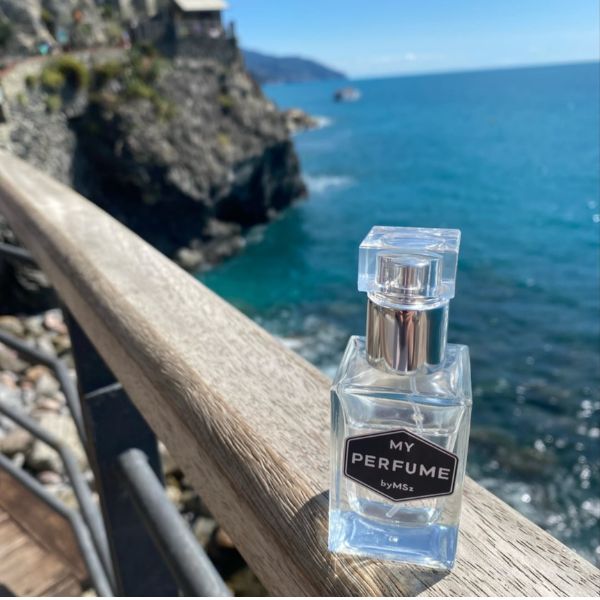
Thanks to Silvia for her openness, for opening the doors of her space and process to me. If you also want to experience creating a fragrance with her, don’t hesitate to get in touch here.
This was Creatives in Action #1.
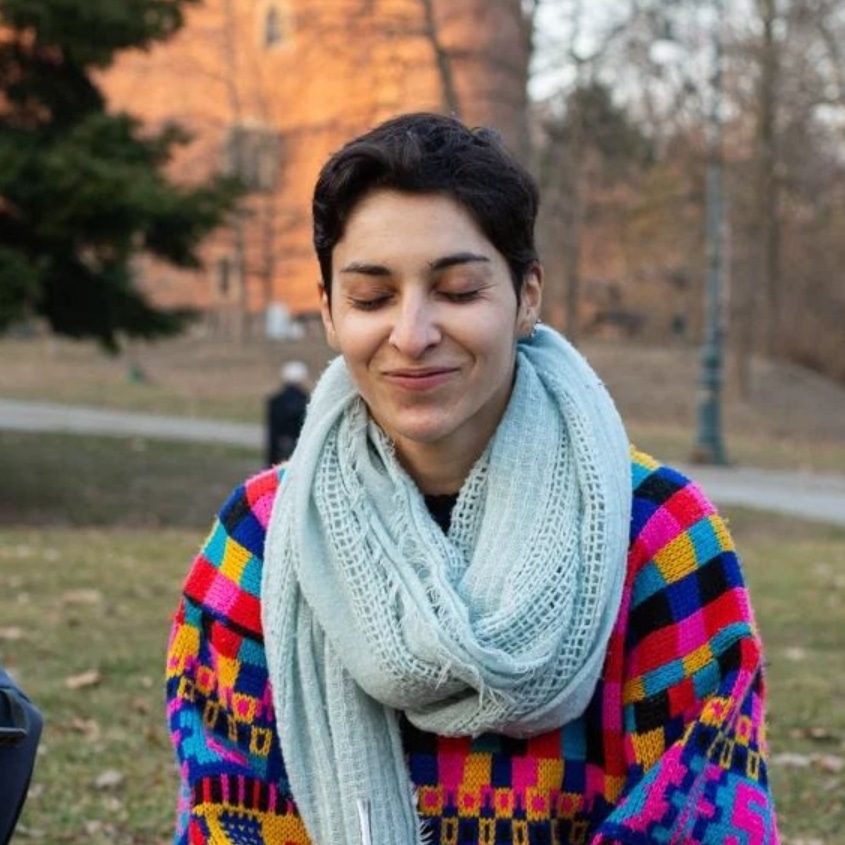
About Florencia
Florencia Miranda is a multidisciplinary artist. She was born in Argentina but lives in Italy. She trained as a social communicator and as a photographer. She has dedicated herself to researching the role of women in history by creating projects such as a collection of photo-embroidery works, a podcast about women, and interviews with Argentine musicians for radio. She has been developing Microklima Projekt for three years, a street art, collage, and workshop project.